Field Manual · § 2
What you will be given
In the order you will be given it, which is also the order in which you will have earned it; for nothing here is issued early. The complex has watched too many die within plate they had not earned to permit any other way.
The ladder
-
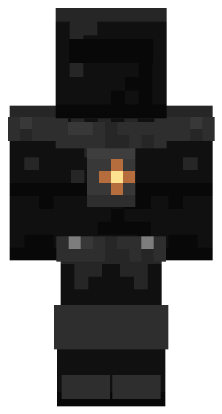
I
Initiate
Shefalite knit. One ember.
-
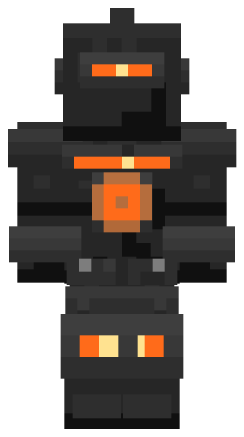
II
Acolyte
The suit acquires hardware.
-
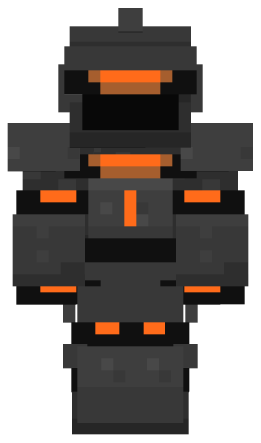
III
Sword
The exoskeleton closes.
-
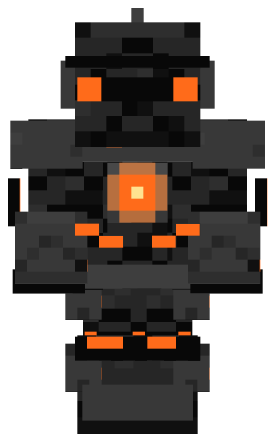
IV
Archon
Flight frame over the plate.
-
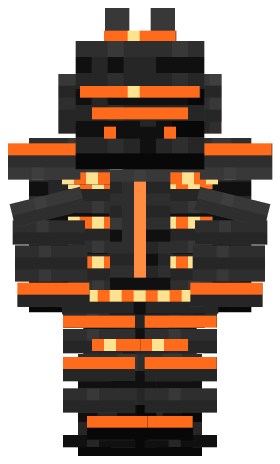
V
Enochian
Cloth of light, woven in rows.
Read it left to right, and the design declares itself, for it was made to. Every suit is the one before it with more mass and more of the light let out. The sites do not move: the ember at the sternum sits in the same place upon the knit suit a Civilian scavenges as upon the raiment in which an Enochian is buried, so that one who has worn any tier already knows where to look upon the next. What changes is only how much there is to see.
Initiate is knit: Shefalite thread, four hard parts bolted on, and a single lamp at the chest. Acolyte is where the suit acquires hardware, and where all six lit sites first come on together. Sword closes — a sealed exoskeleton without a seam, its whole budget of light hidden within its joints; for the tier whose office is to be unseen ought not to glow. Archon is a flight frame raised over that: ducted, intaked, and bearing the mount from which the wings hang. And Enochian is lamellar — stacked lapped courses lit along every seam, a coronet, a flared hem — the loudest object in the war, and deliberately so; for it is the summit of a ladder, and a summit must be seen.
| Tier | Set | Helm | Chest | Legs | Boots | Total | Tough | Knock | Made at |
|---|---|---|---|---|---|---|---|---|---|
| I | Initiate | 2 | 7 | 5 | 2 | 16 | 1.0 | — | Bench |
| II | Acolyte | 3 | 8 | 6 | 3 | 20 | 2.5 | 5% | Fabricator |
| III | Sword | 4 | 9 | 7 | 4 | 24 | 3.0 | 10% | Fabricator |
| IV | Archon | 4 | 10 | 8 | 4 | 26 | 3.5 | 15% | Fabricator |
| V | Enochian | 5 | 11 | 8 | 4 | 28 | 4.0 | 20% | Fabricator |
Diamond is twenty points at 2.0 toughness. Acolyte equals it; all above Acolyte exceeds it. Durability climbs the same ladder — Initiate at eighteen times base, Enochian at forty-five.
Justiciar
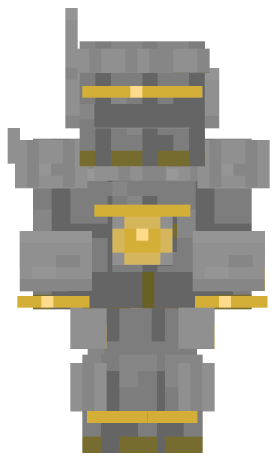
There is a sixth pattern, and it does not stand upon the ladder, for it is not issued. Justiciar is taken from the enemy: white ceramic whose shadows are gold rather than black, cast rather than pressed, with a laurel band at the brow, the throat and the knee. Twenty-two points at 2.5 — between Acolyte and Sword — and asymmetric, a horn upon the left of the helm and a hook at the left shoulder; for their machines are built to be known from one side.
It fits. That is what ought to trouble you. Nothing in the wearing of the enemy's armor is forbidden, and nothing in it is free; and the complex has long since ceased to pretend it does not notice which of its operatives wear it.
The neural interface
Every helmet from Acolyte upward carries one. By it you give a construct an order without touch and without speech; and what may be ordered depends wholly upon the helm you wear. The radial opens all the same, and shows you, in grey, the orders you have not earned and the helm that would grant them.
| Interface | Helmet | Grants |
|---|---|---|
| 0 | Acolyte | Follow. Stay. |
| 1 | Sword | Guard an area. Return to dock. |
| 2 | Archon | Recall — a construct comes to you, once, from anywhere it may still reach you. |
| 3 | Enochian | Broadcast. One order, every construct in range, at once. |
Justiciar bears no interface. Their helmets were not built to receive our orders, and none has yet taught them to.
The Archon Wings
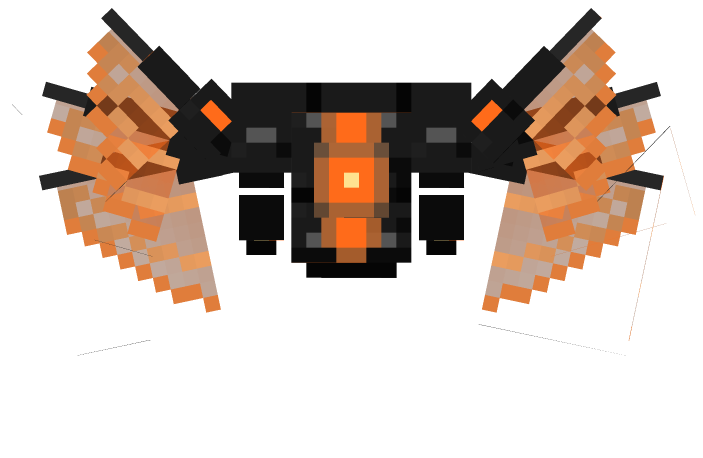
They are worn upon the chest, in the place of a chestplate, and therein lies the whole argument against them: six points where Archon plate grants ten, and you will feel the difference the first time something finds you in the open air.
What they purchase is the sky. They glide; they boost upon Ohr drawn from your own buffer; and the sail is hard light rather than fabric — which is why it folds into a pack the size of a book, and why it goes dark when the cell does.
Doctrine
The Adversary does not contest the air in earnest, for it has never had to. An operative who can stand above a nerve center rather than within it is a class of problem its patrols were never written against — and the advantage will last precisely as long as it takes the enemy to notice. Use it; and build no plan that assumes it.
Blades
The  Herev is the standard: thirteen points, two and
a half thousand swings, and it burns what it cuts without being asked. It
has two modes, and the second is paid for.
Herev is the standard: thirteen points, two and
a half thousand swings, and it burns what it cuts without being asked. It
has two modes, and the second is paid for.
Abilities draw upon your personal Ohr buffer — not the weapon's charge but yours, the five hundred you carry within you and refill by swallowing capsules. When the buffer is empty, an ability does not half-work; it fails, and says so. To fill it before you go out is the difference between a plan and a hope.
| Weapon | Ability | Ohr | Effect |
|---|---|---|---|
| Herev | Judgment Mode | 25 | Half again as much harm to the Adversary for ten seconds. It costs nothing to put away. |
 Maccabee Hammer Maccabee Hammer | Liberation Slam | 50 | Three by three; breaks Adversary structure outright. Five seconds before it may be asked again. |
 Burning Brand Burning Brand | Fire Ignition | 30 | Sets alight whatever you are looking upon. |
A full set of Sword Exoarmor takes a fifth from all three costs. The bonus is named Shadow Protocol; and it is the only gift of tier three that tier four does not give in greater measure.
For he put on righteousness as a breastplate, and an helmet of salvation upon his head. Isaiah 59:17